" "

Completion: Limiting WIP Post II

At every company or organization I have visited over the last three years, there has been a similar problem. I like to play a game with teams called “count the bosses.” People believe that they can work on five, eight, even sixteen projects at once. If you can count more than three bosses that are actively asking you for something every day, you are highly unlikely to be productive.The Zeigarnik effect has a nasty side effect. When people take on too much work – they go looking for more work.One team I worked with was seriously overloaded. All their projects were months behind schedule. Yet, everyone on the team regularly took on little 20-minute “favors” for other parts of the company.Why? Why would any sane person do this?It was because they wanted to complete something. The 20 minute favor could be done and they could go home knowing that they were actually able to get some kind of value out the door. Otherwise, they had only their bogged-down projects to look forward to.Despite this, middle-management frequently throws up its hands. With an exasperated cry they say, “O! Verily, I am smited by internal politics’ steely hand! Have pity on my wretched soul!”In short, they feel that they cannot tell those above them, "Hey, you know, actually completing work is preferable to doing tons of unproductive work."This is because no knowledge worker, in the entire history of 20th century business, has ever actually understood their work. Neither do their bosses, nor do their boss’ bosses. We simply don’t understand the cost of non-completion.So let me state categorically: Your company right now is wasting time and money by not completing things.And not a little … a lot.Oddly enough – when business completes things, it can use those completed things (efficiency!). Business can make money from them (profit!). And, perhaps most importantly, business can move on to new projects (growth!).Stop me when I get too radical.

Why Do We Not Understand Our Work?

People feel that we are able to predict the future. We create plans, absent of any appreciation for the role of variation in our work. These plans, in reality, are someone’s best guess – or even wish – as to what should happen. They mostly always run afoul of what really happens.We’ll discuss the count the bosses exercise more in the context switching post, but for now, let’s focus on the disconnect between plans and product.We’ve discussed the Planning Fallacy before. The Planning Fallacy is a well documented cognitive bias that shows that people routinely underestimate the length of tasks. Further, we’ve posited that a large part of this is our inherent lack of understanding about the role of variation in our work.So, let’s look quickly at how we plan:

  1. You approach me with a project and ask for a plan

  2. I write down what I think, with my years of experience, will be involved to make that plan happen

  3. We talk about that list

  4. You tell me what the budget and deadlines are

  5. I make that list fit into the budget and deadlines

  6. We argue about the results until someone “wins”

  7. We now have a plan

Do you notice anything about that plan?First, we never asked how long it might really take.Second, we assume that I, the project manager, can make these judgments alone.Third, we made the plan fit into a budget that was set before the plan was written.Fourth, we assume that I , the project manager, will be able to see into the future and know which of those tasks will go horribly wrong.Fifth, there is extreme political pressures to conform to the budget and deadline.Sixth, there is absolutely zero provision for changes to the plan.Seventh, there is no guarantee that personnel I have on my project will remain dedicated to my project.Eighth ... Ninth ... Tenth ... the list could possibly be endless.Now I, the project manager, must make this plan happen – despite all this.And … this is a best case scenario.

Plans and People Collide

Our plans assume that certain people will work a certain percentage of their time on a certain project. Let’s say, we have our mythical man and his name is Eldred. Now, Eldred is a great worker. Everyone loves him. He is the best worker ever.Eldred is slated to work on Project A, which is managed by Glenn. Glenn has put into his plan that he needs 10% of Eldred’s time.So Eldred starts to work on Project A – but he has lots of time for other projects.Eldred then gets pulled into Project B, managed by Iggy. That will take 15% of his time. So, now he’s up to 25% of his time. He, and everyone else, is worried he’ll be laid off at such low utilization, so we put him on to help with the very large Project C, managed by Crazy Larry. Crazy Larry says he’ll take 30% of his time.We’re at a good 55%, which still isn’t enough so Lucy’s Project D and Armin’s Project E can both do another 10% each. Now Eldred is at a comfortable 75% utilization. Everyone agrees that’s okay, and leave well enough alone.So Eldred is very busy suddenly. He’s staying late, not completing anything. And people are getting annoyed. He’s only at 75% utilization. Some people are doing much better at 100% utilization on one or two projects.Why has Eldred’s performance suffered? He has a 25% buffer, even! He has "slack"!

What don’t we understand?

The main problem here is that we don’t understand what we don’t understand.

We feel, after years of seeing project plans, Gantt charts, and professional experience that we can adequately foresee the future. And the truth is, we can, we just don’t understand what we’re seeing.

So, when we look through that list of seven issues with our plan, we find a long list of mitigatable, but also unavoidable issues.  The project will more than likely take longer, elements of the project will change, there will be surprises in task duration, there will be unforeseen difficulties, and there will be time-consuming contractual change orders.

On the personal level, we don’t know which of the tasks the project is introducing into our personal work are going to have more complexity than originally anticipated.  We have no way of communicating that complexity once it is noticed. And we have very limited skills to even notice when that complexity occurs.

If we have one project, on which we are focused, then we may have more insight into the problems (because the work has coherence) and can quickly communicate one of these work pitfalls. But if we are on two, three, or four … then we progressively lack that coherence and are unlikely to even spot problems as they arise.

We spin more and more cycles on trying to complete complex tasks because we cannot focus on them due to the natural interruptions of being distracted.

So, if I have a complex task that takes, say, 20 hours to complete, but is interrupted by other projects and expectations, it may have only taken me 20 hours (one half a week), but those 20 hours are spread over months. By the time I am done with the task, I have no idea how long it really took and the cost of delay can be massive. What should have taken 2.5 days to deliver now took 2 months!

The real pain points for traditionally managed projects come from everyone being so busy, with no WIP limits. So when something gets complex – we switch to something else. Complex tasks get buried under the pile of other work you are doing. I have seen many projects suffer long delays and, when doing (considerable) forensic research, there end up being 2 or 3 tasks that the culprits. These tasks would have been expediently dispatched with simple WIP limits because people would have been forced to deal with them immediately.

Limiting WIP and Completion

When we limit work-in-progress, we not only limit the number of projects we are working on, but also the number of tasks. This helps us complete tasks efficiently and effectively. When we are done, we understand what we did. While we are doing the tasks we are fully aware of how long they are taking.When we limit work-in-progress, we have a set number of tasks an individual or a team can be working on at one time. When a particular task spends too much time in progress, people notice.This is post 2 of a 10 part series on Why Limit Your WIP.  Read post 3 Multitasking and Bottlenecks: Why Limit Your WIP III in the Why Limit Your WIP Series.  Also,  see the index for a list of all of them. 

Processing and Memory–Post 1: Why Limit WIP Series

zeigarnik

In 1927, Soviet Psychologist Bluma Zeigarnik (on the left, there) described a certain phenomenon. When we finish tasks, we get a certain closure and move on. When we don’t finish tasks – we don’t.We keep thinking about them. We yearn for completion.In the ensuing years, Psychology has advanced significantly. Zeigarnik’s school of Psychology was called the “Gestalt School.” It was the basis for today’s work in pattern languages (and much of what we’ve done since then). During Zeigarnik’s time, we didn’t have functional MRIs, CAT scans, PET scans, or a mapped human genome – so her school was much more like experimental philosophy than today’s neuropsychology.So, while the science has moved on – the fact remains, we yearn for completion.Today’s research has focused closely on how our memory work and what happens when we disrupt it. Future posts will deal specifically with multi-tasking and context-switching – but today, we will talk specifically about processing.We have a lot of different kinds of memory systems in our heads, and these systems interact quite well most of the time. But, like any systems, they can become overloaded.Procedural Memory is a special kind of memory where we store procedures – the steps we take to do something. This type of memory gives our brains a break – as we don’t have to constantly re-invent our processes or drag them out of memory like we were trying to remember the name of the girl who sat next to us in the fourth grade.Short Term Memory is an extremely short loop. This is about 10 minutes. Short term memory is usually measured by psychologists by bombarding a subject with random facts and then seeing how many of them they can remember.Long Term Memory is a much longer loop. From 10 minutes to forever. This is where we keep things that our brains deem necessary to remember or just plain had time to retain.When we saturate our brains with things to remember, simply put, the brain can’t keep up.  In general, our brain is aided by a few things in the memory department:1. Coherence – If you go see a movie, you’ll generally remember the plot of that movie for a very long time. That took longer than 10 minutes, and generally had a lot of sensory input. But, it was a coherent, fairly linear event that your brain could easily process. Sometime it might make you think for a long time after, but you are still able to remember.2. Concentration – If we focus on a small set of tasks, we concentrate in both senses of the word. We both focus our attention and we concentrate our options. In the short term, we limit options in order to achieve a state where we can direct attention to a specific task. Again, with a movie, we are concentrating our attention on that movie for a much longer time than 10 minutes.3. Sequestering – Many people now use Netflix or other services to watch movies at home. I’m willing to bet that they remember less of the movies they watch because in a movie theatre, we are sequestered. We are locked in a box where nothing but the movie happens. At home, we are loaded with distractions. Those distractions steal attention away from the movie and, therefore, make the movie less memorable.

What this means at work

At work, when we do not limit our work-in-progress, we end up meeting none of these criteria.Doing multiple projects at once and being subjected to random disturbances:1. Destroys Coherence – When we try to work, answer e-mail, and switch back and forth between demands, we no longer have coherence. It would be like if we switched back and forth between The Princess Bride, Full Metal Jacket, a World Cup game, and CNN at random intervals. You might be able to get up to speed, but you really will never have “enjoyed” any of them.2. Forget Concentration – Again, if we use the example above, how much do you think you could concentrate?3. Sequestering? Not so much – With utter disregard for sequestering, we find ourselves overloaded with media and unable to focus.Let’s make this clear: Without coherence, concentration, and sequestering, we remember with much less fidelity. If your team, your employees, or your you are working so hard that there is no memory of the work done – you are flushing value out the door.

Limiting WIP

When we limit WIP, we allow people to concentrate their work, allowing  time to create a coherent story.True sequestering is difficult, and often impractical. In software development, over-sequestering of Agile teams has proved divisive and counter-productive. We are not advocating that you completely isolate yourself from the organization. There is another alternative, tactical sequestering, in a way used at The Library Corporation.At TLC they regularly employ something called the Pomodoro Technique – a system where a person or a team focuses for 25 minutes on a specific task or set of tasks – then takes a five minute break – then repeats. During that time, they cannot be disturbed. It’s a small enough time that people can come back to interrupt them later, but it’s long enough to get significant work done. It is also long enough to gain coherence around the work being done – aiding memory and reducing transaction costs for context switching.This is post 1 of a 10 part series on Why Limit Your WIP.  Read post 2 Completion: Limiting WIP Post II  in the Why Limit Your WIP series.   Also,  see the index for a list of all of them.

Why Limit Your WIP: A PK Info Series

Throughout the last year, I have been surprised by the Swiss army knife that is limiting your work-in-progress.  When I tell people:

You can’t do more work than you can handle.


Everyone gets that. C Level execs, economists, bankers, nurses, middle managers, soccer moms – everyone gets the truth in that statement.But what it’s taken me some time to realize is that, the statement doesn’t compel people to action.  It should, but it needs a little oomph.So this series, which will be followed by a series of “How To Limit Your WIP,” will also be turned into a Mememachine book. At the end of this year, I will release all four of the 2012 Mememachines (Why Plans Fail, 15 Elements of Kanban, and these two on limiting your WIP) as physical books, to provide one quick document with all this vital information.But, for now, we are focusing on Why Limit Your WIP.In the end, it all comes back to the sentence: You can’t do more work than you can handle. But why? Why can’t we do more work than we can handle? What happens when we exceed our WIP?Intuitively it makes sense, but we all live in a world that provides constant interruptions, overloads us with information and expectations, and we all – each and every one of us – want to help others. We place ourselves in situations where saying “no” makes sense to no one – not even ourselves. We place others in positions where they need to complete things for us, when we have no understanding of what their workload is.As bosses, we see people's time as finite and easily dividable. We believe our estimates and we believe that work only happens within the Gantt chart.There are at least 10 very good reasons to limit your work-in-progress. Over the next 10 installments, we’ll discuss them in depth. Again, I’m certain there are more. If you come up with others, contact me or Toni for a guest blog, we’d love to have them on the PK site.What are those 1o you might ask? They include how Limiting Work in Progress help:

Done! Please check these out - they are currently in the editing and extending mill and will become another Modus MemeMachine Book.

Kaizen Camp: Personal Kanban Conversations Happening Worldwide

Kaizen Camp

The Kaizen Camp in Seattle was such a success that people around the world and sponsors have requested more and more.So, we've launched Kaizen Camp as its own entity.We now have them scheduled for New York, Los Angeles, and Boulder. Tel Aviv, Sydney, Melbourne, and Saigon are in the works.We're excited to talk about continuous improvement, Personal Kanban, and Lean with a global audience. Come join us!If you don't see your city and want to bring Kaizen Camp to you, please visit the site and let us know. We're building out a 2013 schedule!

Kaizen Camp: Seattle–What We Did at Camp

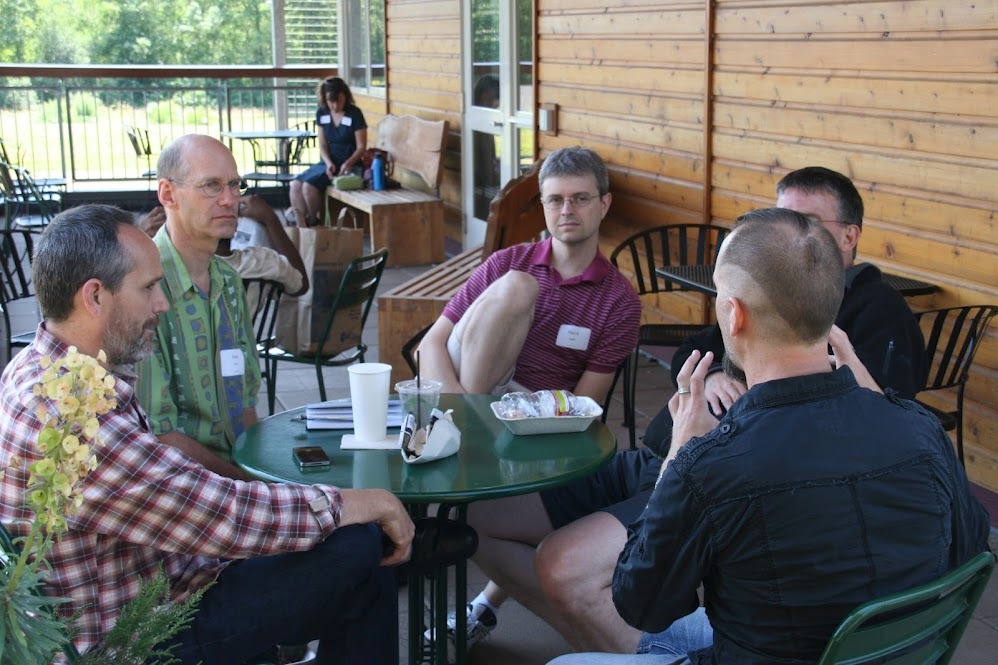
Kaizencamp2012Seattle01

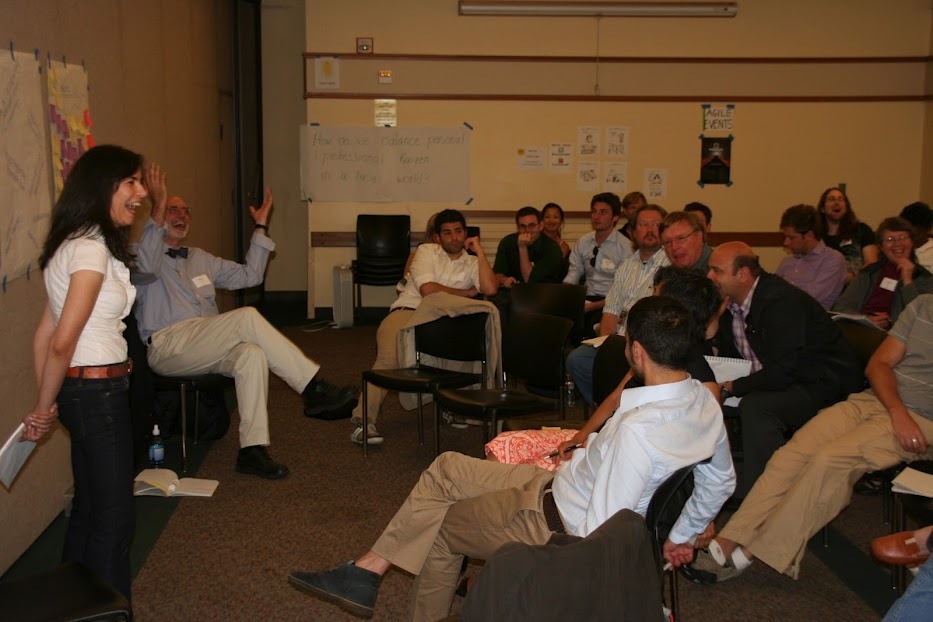
Kaizencamp2012Seattle02

This year’s Seattle Kaizen Camp was awesome.I loved the range and diversity of the attendees, with people from health care, education, government, software development, and a host of other occupations. We had attendees from college students to C-Level management. We were once again very close to gender parity. And we had people from across the US, as well as Europe and Asia.All this to discuss our experiences with continuous improvement, Personal Kanban, and lean.The weather co-operated, so most of our 75+ sessions were held outdoors in the beautiful Seattle summer. Just warm enough to be comfortable.Sessions included:

  • Kanban at Home

  • Failing Well

  • Lean Contracts

  • The Cynefin Framework

  • Accelerating Innovation

  • Metaphors to Convince Others of Lean Principles

  • Resilience with Kanban

  • Extreme Self-Organization

  • Personal Kanban Experiences

and more .. about 70 more.What was most important for Tonianne and me as organizers was the speed at which people created topics and the depth of conversations.All the topics and conversations were conceived of, led, and participated in by the attendees themselves. There were no official speakers, no lengthy powerpoint presentations, no middle-of-the-day sugar crashes in dark rooms. Kaizen Camp: Seattle was people practicing Lean, Personal Kanban, and Continuous Improvement talking about what they did and how they did it.We are looking forward to Seattle’s event next year, but in the interim we have several planning across the US.Coming up later this year (announcements for each will be made soon):

  • Kaizen Camp: Boulder

  • Kaizen Camp: SoCal

  • Kaizen Camp: NYC

Please come to one near you!   Several of the Photos and notes have been posted here.

" "