" "

The Pen: Managing Stalled Tasks

This question is from an interview I just did with an internal magazine with ExileSoft, a Sri Lankan company. The question has been haunting me, though, so I’m extending my reply in this post.

Thushara’s question:

“I started to practice Personal Kanban. But I got stuck at some point.  I ended up having too many tasks in the “Pen” which never moved.  (This interview was a good example. It was there over 9 months). What should I do?”

Answer:

The Pen

When we first created THE PEN to allow us to sequester tasks delayed by forces beyond our control, we realized that it ran the risk of becoming a sinkhole - a place where work would fall never to be seen again.Here we see a kanban with a THE PEN column. The ticket in there says “Schedule Plumber”. If we didn’t have a column like THE PEN our DOING column would quickly become mired in work that wasn’t complete - but we could not work on.So THE PEN is necessary in Personal Kanban, but, as Thushara has found, it doesn’t stay looking nice and neat like this for long. It fills up with every promise someone has ever made to us and we’re left with the visual record of eternal repeating disappointment.Okay, maybe it’s not that bad.But, for us, half exercised options (which is what a half-done task is) are unacceptable. So, we have a few rules of thumb:MAKE THEM ACTIONABLE: Items in THE PEN should either be obviously waiting on work by others and have born on and revisit dates. When you move something to THE PEN, note when it went in, why it is there, and when you should revisit it.FINISH BEFORE START: Always look at your Pen before your pull a new task. Clean your house before you buy new things.WIP LIMITS: Set limits on the Pen – both for age and for number of tasks. When you reach a limit, you need to place concerted effort in getting rid of those tickets.ASK WHY: If you see tasks backing up ask yourself  “Why are these in THE PEN?” Because, you know what? If you didn’t have the Personal Kanban … it would still be stuck. You’d just forget about it over time. So, is it in the pen because it isn’t relevant anymore? Is it there because a project didn’t get finished?ACT:You need to act on those tickets. You can do one of the following:

  1. Nothing – If you are honestly waiting on someone and there is nothing you can do, then leave it in THE PEN.

  2. Refresh – Contact the people on the card(s) and remind them that you are waiting

  3. Escalate – If there is an escalation path (someone to involve of higher rank to increase the urgency of the task for others) bring them in. If there is not, contact the people who are holding up the work and make the ticket’s value for you very clear to them.

  4. Push – You have a pull system but others do not. If a card is stuck simply because others are procrastinating or don’t care – take the card to them and work it off your board.

  5. Recategorize – If this task is not waiting for a person to do something, but for an event to happen (like a trade show or a deliverable deadline) that is forseeable and in the future, declare this task done and make a new ticket for follow up at that later date which can go in your backlog.

  6. Kill it – If the option value for this task has expired or the coordination costs are too high, you can decide that ticket is done and contact the people letting them know you’ve had to kill it.

Managing Sandy’s Aftermath: Emergency Response Personal Kanban

Hurricane Sandy Aftermath

Despite our best efforts, there are simply some instances where we cannot limit our work-in-progress. Forces beyond our control seem to conspire to control us. Natural disasters are unfortunately well-suited for this - they have little or no respect for our carefully controlled WIP.When we’re smack in the middle of an emergency like Hurricane Sandy, it seems all we can do is react to immediate needs: which windows to avoid crashing tree limbs, what doors to insulate against rising and rushing water, where to seek shelter should evacuation become imminent. Once the storm passes, we’re left to contend with a heretofore unimaginable trail of destruction - to our homes, to our businesses, to our mental well-being.It is at the most emotional of moments that we find ourselves forced to make vital decisions. What do I do first? Where do I begin? Will I ever get out from beneath this overwhelming physical and psychological debris?In the Personal Kanban book, we discuss a design pattern which doesn’t quite resemble a “typical” Personal Kanban. In the aftermath of an emergency, the “Emergency Response Approach” helps us:

  • Visualize all the work needed to respond to the situation at hand;

  • Understand the complexity of the situation;

  • Track the states of completion for most important and intricate tasks;

  • Compile notes during the completion of those tasks;

  • Keep a written record of how we dealt with the emergency;

  • Dynamically re-prioritize tasks based on shifts in need or context; and

  • Understand our options.

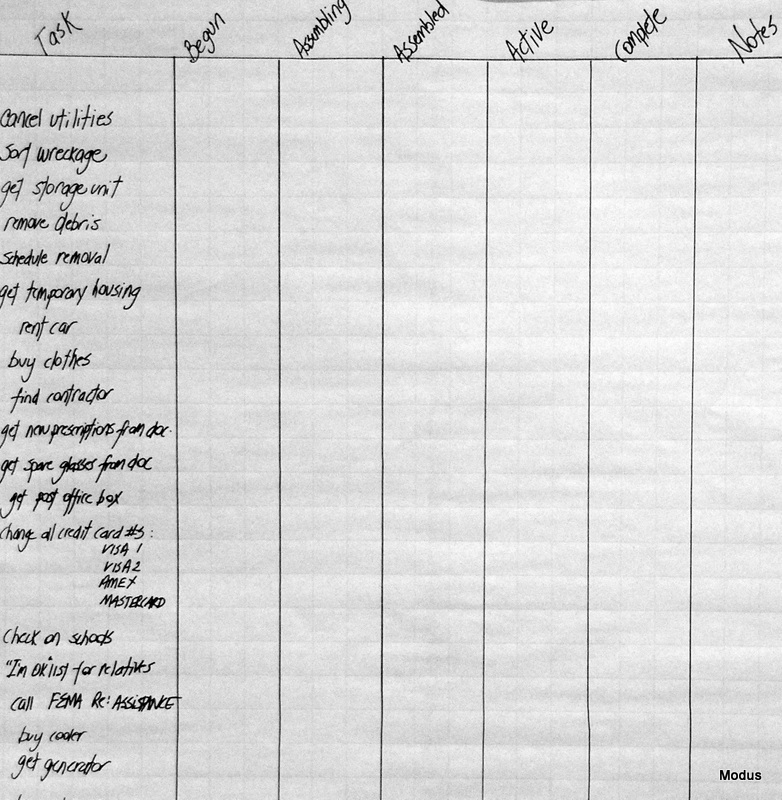
As you can see here, we created this matrix-style kanban with the goal of seeing all our work and ensuring that when we are finished we’ve lost no information in the process. We chose to go extremely low-tech - just flipchart paper and pen - not only because an online kanban would require electricity, but also because with a sticky note-based Personal Kanban the stickies could easily become detached, causing vital information to become lost.In an emergency situation, this kanban becomes your war room.Your “value stream” - the steps it takes to complete a task - might look something like this:

Task → Begun → Assembling → Assembled → Active → Complete → Notes

Begun: If it’s been started (you’ve begun to work on the task).Assembling: If it’s being assembled (you’re gathering paperwork or other requirements).Assembled: If it’s been assembled (requirements are complete).Active: If it’s being processed (by you, or you’re waiting for someone else to act).Complete: If it’s complete.Use the Notes column for points of contact, policy numbers, additional resources etc.One of the major elements of this design pattern is its tolerance for beginning some tasks while allowing others to remain incomplete. Why would we advocate not limiting WIP when that is one of Personal Kanban’s fundamental rules?During an emergency, opportunities to begin tasks are actually valuable.Ordinarily, we want to limit our work-in-progress and complete each task before a new one begins. In this case, there are way too many complicated tasks to undertake, too many coordination points, and too many things to do.This is multitasking by necessity, but it’s controlled multitasking. With a to-do list, we’d have an accounting of the tasks, but we wouldn’t understand their state or be able to limit our WIP. The Emergency Response Approach includes includes a few helpful features that are designed to overcome the limitations of a to-do list.It works like this:

  1. In the Task column, write down everything you need to do. For the moment, don’t worry what size the tasks are. Just get them out of your head and onto your kanban.

  2. Look at your Taskcolumn and begin working on the highest priority task.

    1. Note that you’ve started by writing a check mark in the Assembling column.

    2. Assemble all the items you need to actually complete the task (insurance numbers, phone numbers, pictures of damage, etc)

    3. When you are done mark with a check mark that you’ve Assembled everything and can begin working on the task in earnest. This task is now Active.

    4. Once a task is Active, take notes directly on the kanban in the Notes field (it’s okay to spill out). Our goal here is after everything is done, your emergency kanban is a one-stop-shop for what happened, when it happened, and how it happened.

    5. When the task is Complete, mark it and move on.

It’s important to note:

  • You’ll have many tasks in-flight at once;

  • You’ll be interrupted by other tasks constantly;

  • You’ll never finish them in priority order;

  • There will be many more tasks than you initially expected;

  • You’ll need to remember details later that don’t necessarily matter to you right now;

  • You are doing heroic things right now. This tool is here to help you keep track of what happened; and

  • There are things you will miss, and that’s okay.

Your goal right now is to get your life back to normal. We hope this tool helps you through this difficult time and invite you to feel free to ask questions in the comments.Image from Hurricane Sandy courtesy of Casual Capture  whom we hope is okay. 

Learning: Why Limit Your WIP X

In “Creating an Economy” we discussed four elements we needed to understand to build our economy. The third was that knowledge work involves learning.Knowledge workers need to learn – they learn by doing, by observing, by experimenting, by reading, and by adjusting.Doing – We learn best by directly experiencing. If I have a four hour powerpoint presentation about how to play Super Mario Brothers, you will understand that my little pixelated guy can jump on things, that sometimes he’s big and sometimes he’s small, and that there are coins around. But you would learn much more simply playing the game. Knowledge workers learn a considerable amount just by starting and beginning to work on a project. Through doing we understand the coherence of our workObserving – There is much in the average project to observe. Some tasks are easy, others more difficult. Some things we are expecting to work well, do not. There are personal conflicts. Through interested observation, we become aware.Experimentation – In our doing and our observations we note discrepancies between the way things are and potential, more ideal, ways they could be. We build hypotheses about why these are. We experiment to see if our hypotheses are correct. If they are not, then we learn and try again. If they are, we learn, we are happy, and move on to the next thing to fix.Reading – Or watching a lecture. But when we are aware – we have a better idea of where the gaps in our knowledge are. We can engage in directed learning because we know, rather than just learn because of current management fads or because someone orders us to. In this case, reading or classes augment our observations and experiments.Adjusting – Learning is humbling. It makes us reassess our current processes and replace them with other ones. Sometimes learning comes with epiphanies. Sometimes adjustments are minor.

Limiting WIP and Learning: The Onset of Agency

Limiting WIP gives us the flow and coherence we’ve discussed throughout this series. It is not a panacea, but it is an extremely powerful tool. Consider is a pre-requisite more than a cure-all. If you, your team, or your company is not limiting work-in-progress, then they are likely distracted, overburdened, and unlikely to innovate.Limiting WIP is not going to instantly and magically create a magic workforce. Anyone making claims that any out-of-the-box process will instantly result in hyper-productivity is a snake oil salesman.What limiting WIP will do, however, is promote the growth of something called agency.When Eldred began to see himself setting policy by starting working groups, when he became comfortable with the thought of completion, he was gaining agency.The trick here was that none of the project managers could truly provide Eldred agency. They also didn’t have the authority. Only Markus Blume could truly give the people in the company the ability to act on their ideas. He had to set policies and expectations that would both support that decision making and not hinder it.Limiting work-in-progress was vital in this effort because overloaded people simply don’t have the understanding necessary to make thoughtful change. To be sure, overloaded people can come up with endless suggestions for change – but it’s unlikely to be thoughtful. It’s more likely to be reactive to their overload. This is post 10 in a 10 part series on Why Limit Your WIP. See the index for all 10.

Communication: Why Limit WIP IX

Team B

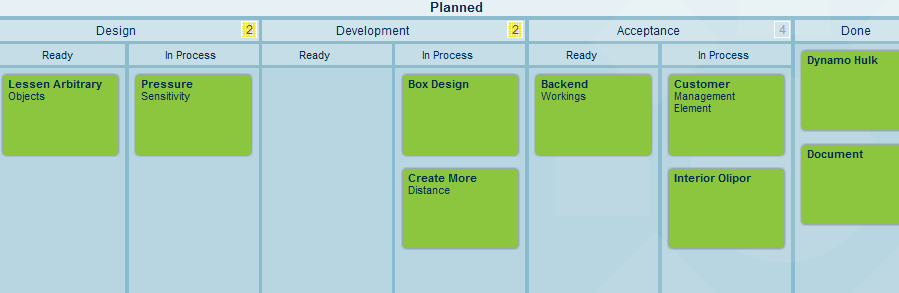
“Good morning, Eldred.”“Good morning, Markus.”Before Markus came on board, there was zero contact with the CEO. Maybe at the Christmas party. He was more like a movie star – someone you recognized but didn’t dare approach. Certainly not someone who would know your name.Markus, on the other hand, was a regular at stand-up meetings. He’d participate, but not dictate. It was like he was actually interested.For months now, Team B had been regularly releasing features for the product. Now, the team was suspiciously close to … delivering.Markus comes into Team B’s space and looks up at the kanban. He sees directly what’s in process, what’s done, and what is almost done.He says to Eldred, “That looks good!”There was no briefing. There was no status meeting. He can see that work is flowing. That two tasks are completed and three more are in acceptance testing. Soon they’ll be ready as well. No tickets are marked as blocked or as a problem.The team is within their WIP limits – 2 for design, 2 for development, 4 for acceptance.Eldred says with a smile, “If the box design is out of development today, the rest is easy. We have a working session on that today. I think we’ll knock it out.”After years of shoddy or no releases, they are releasing something after a matter of months – and that feels good.

Communication and Limiting WIP

The WIP limits for the team enable flow of work, they also limit the work being undertaken to a reasonable level. On Team B’s board, Marcus is able to quickly grasp what is going on – so can the members of Team B, so can members of Team A. Everyone can see the simple story that is this project.That instant information transfer from kanban means that no one on the team had to tell Markus their status. Since nothing is blocked or shows a status of pain, there is no need to talk about them in depth. Eldred mentioned one feature in particular, because it was relevant and he was excited about it.Time consuming communication can now be reserved for things people actually need to talk about.In addition, the board is always on. If something becomes blocked or in danger, the board communicates that too.Without limited WIP, the board’s conversation becomes much less compelling. We never know if people are overburdened. We will likely have an incomprehensible number of tickets on the board. Tickets will enter the board and languish for long periods of time. When questioned, people will say, “Yeah, I’m just not working on that right now” and will continue to say that as the board fills with the trivial and the catastrophic.The healthy constraint of limiting WIP creates a coherent message that is instantly communicated to all. This is post 9 in a 10 part series on Why Limit Your WIP.   Read post 10 Learning: Why Limit Your WIP X in the Why Limit Your WIP series.  Also, see the index for a list of all of them.

Awareness: Why Limit WIP VIII

Whether you call it Buddhism or another religion, self-discipline,that's important. Self-discipline with awareness of consequences. ~ Dalai Lama

below the water line

Self-discipline with the awareness of consequences.When we become self-aware, we shed learned helplessness. The inability to act is replaced by the polar opposite – a desire to act.We have seen the repeated with teams that previously had given up. A corporate culture of failure acceptance is created and is so pervasive that people say, “continuous improvement is impossible in my culture.”What we’ve seen, however, is quite different. People that have been in a low-trust, punitive environment where action is shunned do develop learned helpless and they do shut down, BUT … they create pent-up demand for change. They may have learned that they can’t help now, but they’re STILL THERE.So Eldred is still there, even though he was beaten down by years of five projects. Eldred is still there.For years, Eldred has had to keep only the self-discipline of not going insane being pulled in so many directions. The structure of the company limited his ability to have the self-discipline of good product development and completion. Eldred never had to be aware of consequences. Other than internal political ones, he was sheltered.Now, Eldred is a little scared. He recognizes that now Team B is on the hook for completing a product. A real product. To be really released to real buyers. And, not only that, he recognizes that Markus Blume isn’t going to tell him, or his project manager, what to do.Eldred is also aware that no one got laid off. There was so much work not being done that the staffing still seems insufficient even for just these two projects. How is that possible?Eldred is becoming aware.Eldred sees that he could suggest working groups to get out features faster. It might work. He’s always wanted to try it, but never could because even he couldn’t commit to it. It’s an experiment, but … it just might work.

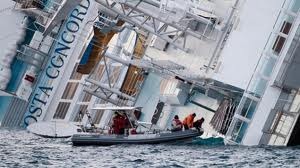
Don’t Be the Costa Concord

When teams become aware, they tend to want to make decisions.Risk-averse people (management and workers alike) tend to fear this shift because it means that decisions are made by people not in authority. The issue here is that we’ve had this pendulum so well stuck at the other end of the spectrum that no one can make decisions at all.  Small, daily course corrections for projects and the company should not require edicts from the highest of authorities.The rule of thumb that we’ve used is something called the water line.If you are about to make a decision, ask yourself, is this fails does it poke a hole in our corporate ship above or below the water line?If it’s above – we just say, “ooops,” we patch it and we move on.If it’s below – we should have a conversation or set of conversations with those in command of the ship so they can either say, “Um, let’s not do that” or “Okay, let’s do it and we’ll prepare if something goes wrong.”And yes, that’s vague.In general, there are going to be three water-line zones.Obviously safe, obviously dangerous, and that annoying transition band in-between.As the work force is transitioning to becoming more fully aware of their actions and their potential consequences, you might have a transgression or two. However, we’ve never seen a ship sunk because of awareness.What is more likely is that ships no awareness end up like the Exxon Valdez.

Eldred’s Unexpected Bonus

Limiting WIP for Eldred and Team B has led to a keener understanding of their product. They have been able to focus, as they are each only working on a very few tasks at a time. Extremely limited context switching has raised the productivity of the group. Increased project coherence has made them much more effective (they know what they are building and why).Greater awareness is creating an efficient operation. They can see inefficiencies, they have more time to talk to customers, and they have a shared understanding for the product itself. This is post 8 in a 10 part series on Why Limit Your WIP.  Read post 9 Communication: Why Limit Your WIP IX in the Why Limit Your WIP series.  Also, see the index for a list of all of them.

" "