" "

Preschool + Personal Kanban = Kidzban Success

After teaching in the 4 & 5-year-old student preschool class for many years, the last year I taught I became a teacher in the 3-year-old student classroom.  While excited, I knew it would be a challenge when setting up my classroom because many of these students would not know how to read or would have a very limited sight word knowledge.  The classroom would have to be highly visual. I knew I wanted to use Kanban in the classroom, my challenge was how I was going to use it.

Classroom kanban

The first month of school I wanted to teach my students about being aware of the world around them and the rules of safety when outside playing.  So we focused a bit on stoplight safety.  They knew what a stoplight was but had no idea about its function and what it meant for them when crossing a street with a caregiver.  We first learned about the three colors and what each color stood for.  Then to re-enforce what those colors meant they were each given a colored circle and asked to place them in the correct place on the stoplight  and then tell the other students what that color meant- green safe to go, yellow slow down, proceed with caution, and red, stop.  When we were sure they were confident and  knew all three they then were asked to move their circles to the completed lane.  They had fun watching each other move their circles and if a student was struggling the other students would collaborate with that particular student to help them put their circle in the correct spot.  I heard from quite a few parents, that their child let them know when they went through a yellow light too fast or even through a red light! This safety stoplight kidzban was a big success.

Preschool classroom helper kanban

One thing that I have found after 10+ years of teaching preschoolers is that they absolutely love to help you out in the classroom.  So I knew from the point when I was assigned this class one of the Personal Kanbans I would design would involve classroom tasks.  I wanted to design something that represented fun, so I decided on ‘flying a kite.’Here’s how this works: each student has a bow on the tail of the kite.  Every day we chose the next name on the tail and that person gets to ‘fly the kite’ and essentially is the classroom leader for that particular day.  The kite is divided into four sections, each section has a classroom task: flag holder, dressing the classroom weather bear, being the line leader, and ringing the clean-up bell.  The student’s bow moves around to all four tasks as they need to be completed. The student who is the kite flyer for the day also wears a badge, that goes home with them at the end of the day.

  • Upon entering the room most students will walk over to check out the kite to see who is going to be the leader each day in our class.  They are learning not only to recognize their name but the names of their classmates.

  • They have learned their tasks, if I happen to get sidetracked in the classroom doing another task students will come up and ask me, “Is it time for Judy to dress the weather bear yet?”  A lot of times the student who asks me that question isn’t even the one to be the student leader for that particular day.

  • Group participation, when the student is dressing the weather bear, many other students come over to participate and offer help.  This aids in learning to get along in group situations.

  • This is not a traditional kanban board, however it works just like a traditional kanban, there is a ready lane-the tail with the bows, a work in progress lane-the kite sectioned into four tasks, and completed lane-the bows placed under the words I flew the kite today.

  • This is giving my students the visual of their tasks, the ability to see themselves move around the classroom completing these tasks and the huge confidence of seeing their tasks completed.

  • The badge that they get to wear when they are the kite flyer-class leader for the day makes them feel important. Upon wearing it home it breeds conversations about what tasks they had to complete.

  • Every student knows they will get a turn, and they are excited when they see where their bow is placed on the tail and when their turn will be coming up.

  • It helped to get the students into the ‘groove’ of our classroom and what would be happening during their day. This is many of my students first experience in a structured classroom, and it can be very scary and intimidating the first few weeks. This helped greatly ease their minds and make the experience a positive one.

I found that my students were having a difficult time grasping the Thanksgiving holiday, so I decided that we would design a Thanksgiving Personal Kanban together in class during our circle time.
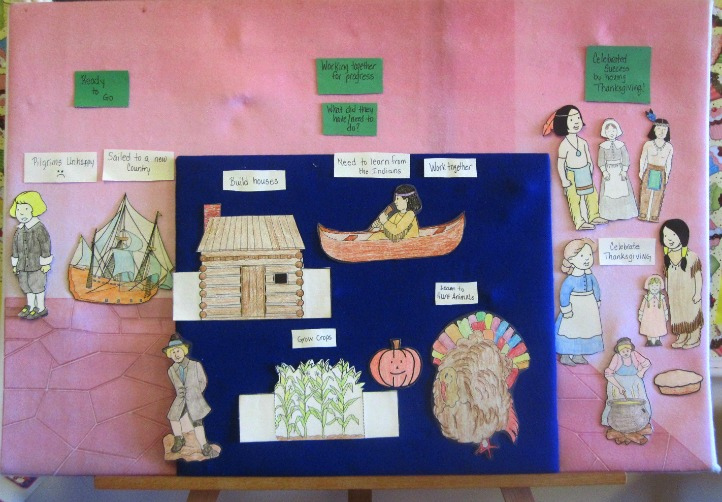
Teaching Thanksgiving Kanban

We set up the pilgrims traveling to the United States first, talked about how they would arrive then we talked about what they would need to learn to survive with the Native Americans, how they would grow food, prepare the food, etc.  Then we discussed how their working together made them successful and happy, which brought us to celebrating Thanksgiving.  By doing this kidzban together they learned more from the visual then by me just talking or reading from a book.  They got to place the pictures on the board, and we all collaborated on why and how and what we thought they did next.  The students loved working on this board together.  Now they know that Thanksgiving is about more than just eating turkey.

My biggest hope is that I begin to see more and more teachers and educators using Personal Kanban in the their classroom.  I firmly believe from pre-k through college this can be a class game changer and great collaboration tool across the board in every subject.This is an updated post that originally appeared on the Nothing is Out of Reach Blog.
Kidzban Around the Web #2

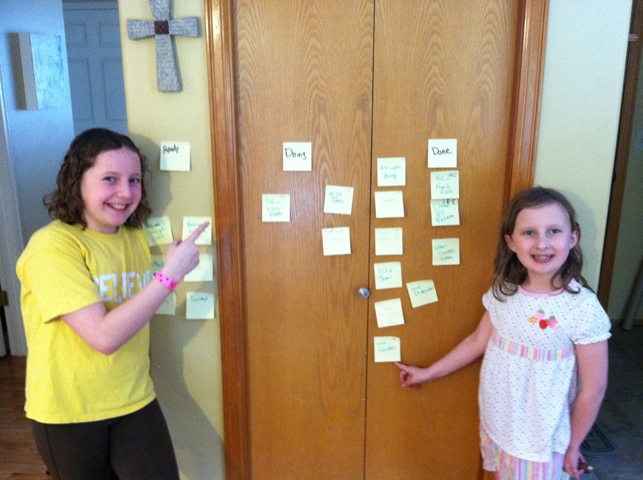
Around the web people are sharing their experiences with Kidzban.  This is the second post in the series – Kidzban Around the Web.Joseph Flahiff introduced Kanban to his daughters on a Saturday morning when they had guests arriving at 2pm, and they needed to get chores done before their guests arrived. Joseph states in his Saturday Chores with Kanban Part I  "Normally the girls choose all their chores before they start."  They were previously using a chores list set up in an excel program.  On this particular Saturday he decided on introducing a Kanban board.

KIdzban Saturday Chores

Take a look at this wonderful video below where Joseph interviews his daughters - JoHanna and Jillian. They discuss the few bumps in the road they encountered and how they tackled their challenges together and why they'd like to use the process again. Joseph's daughter JoHanna mentioned "There will still be some bumps but not the same ones because we've learned from our mistakes.""Working with a list we never really felt like we were working together.  We felt like competitors instead of teammates." - JoHannaThe next Saturday, Joseph's entire family got into the action even his 3 year old daughter Joy completed tasks on their Kanban.  The Saturday Chores with Kanban Part II highlights another wonderful video below where the girls discuss how they worked together and broke up the chores into smaller tasks so they weren't so overwhelming. Team work is personified when you hear how all three daughters managed the task of vacuuming the master bedroom together.When asked what her favorite part of using the Kanban was Jillian stated "The achievement of finishing a chore."You can read and view Joseph's Saturday Chores with Kanban Part I and Saturday Chores with Kanban Part II in their entirety by heading over to his WhiteWater Projects blog.Videos and photo credit: WhiteWater Projects Blog.This is the second post in the series - Kidzban Around the Web.  You can read the first post in the series here.

Kidzban Around the Web #1

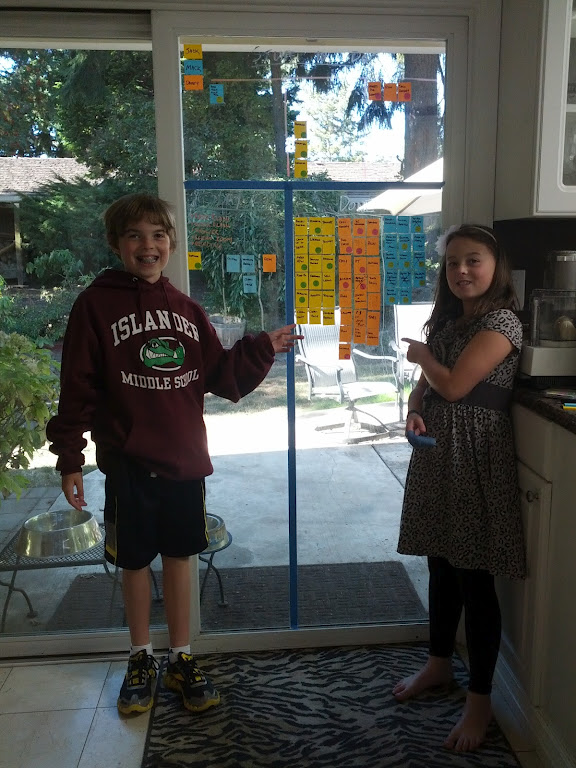
Highly Visible Family Kidzban

Around the web people are sharing their experiences with Kidzban.  This is the first post of the series - Kidzban Around the Web.With families becoming busier and busier it can be overwhelming keeping up with everything we need to accomplish in each day.Steve Hamilton tackled this problem with his Kidzban.   Steve's wife was away for 3 weeks, and while she was away he wanted to keep track of their two children's activities so he decided to set up a Kanban board on the sliding glass door. Steve explains "This is the single most visible space in the entire house — it is the first thing you see when you walk in the front door."Each Sunday they planned out the coming week - homework, activities, practices, etc. The cards were color coded for each child. Every night they would spend a couple minutes planning the next day. That's when they would move the cards from the top section into the today section.

Steve went on to add "We are now one full week in and so far it has been smooth sailing. No missed homework, no missed practices, good meals each night and the house is reasonably clean!"

Please head over to Steve's Blog to read his Kidzban post in it's entirety.Photo credit: Steve's Blog.There often are things we don't get done before we go to bed each night. Tim Wise came up with a perfect solution for his 6 year old son with his Kiddie Kanban: The Going to Bed Kanban Board.Tim begins by noting "My 6 year old loves responsibility. He loves being able to know what he has to do and getting it done himself.  He does not love when his dad tries to bark commands."They decided to write everything that needs to get done before bed on sticky notes and put them on the wall.  A few tasks were - change clothes, take a shower/bath, read a book, brush teeth, learning new prayers, etc.  His son mentioned "This is like a Todo list for bed." So they labeled the first column TODO. He also said, "We need to be able to tell when I am done." So they then added a Done column. They added the Doing column so they could see what was being worked on.  After the notes went up his son began rearranging them putting them in order. Tim mentioned to his son that was prioritization.Tim finishes up by stating "We said some prayers after reading together, and we learned a new one together. 'Thank you for today. Amen'  So we accomplished learn some new prayers along the way. Unfortunately, we never fit in the bath, so I guess we'll be stinky together tomorrow."You can read the entire Kiddie Kanban: The Going to Bed Kanban Board post on the Agile Dude Blog.This is the first post in the series - Kidzban Around the Web.  You can read the second post here.

The ABC's of Personal Kanban in the Classroom

Personal Kanban in the classroom is one area that I am highly passionate about.  Why? I have seen it in action, first-hand in the preschool classroom.  As a teacher it is exciting when your students are excited about learning.The first Personal Kanban we introduced at preschool was an ABC's Kanban.  We used this for 26 weeks, each week introducing a new letter for the students to learn.

Preschool ABC's Kanban

 When we began on our evolving classroom journey we had just a few simple goals:

  • We wanted to the classroom Personal Kanban to easily understood by parents and the teachers alike.

  • We wanted the students to excel at what had traditionally been a very unappealing and difficult part of the preschool classroom activity-learning to write the letters. We wanted to excite the children about learning not think of it as a chore.

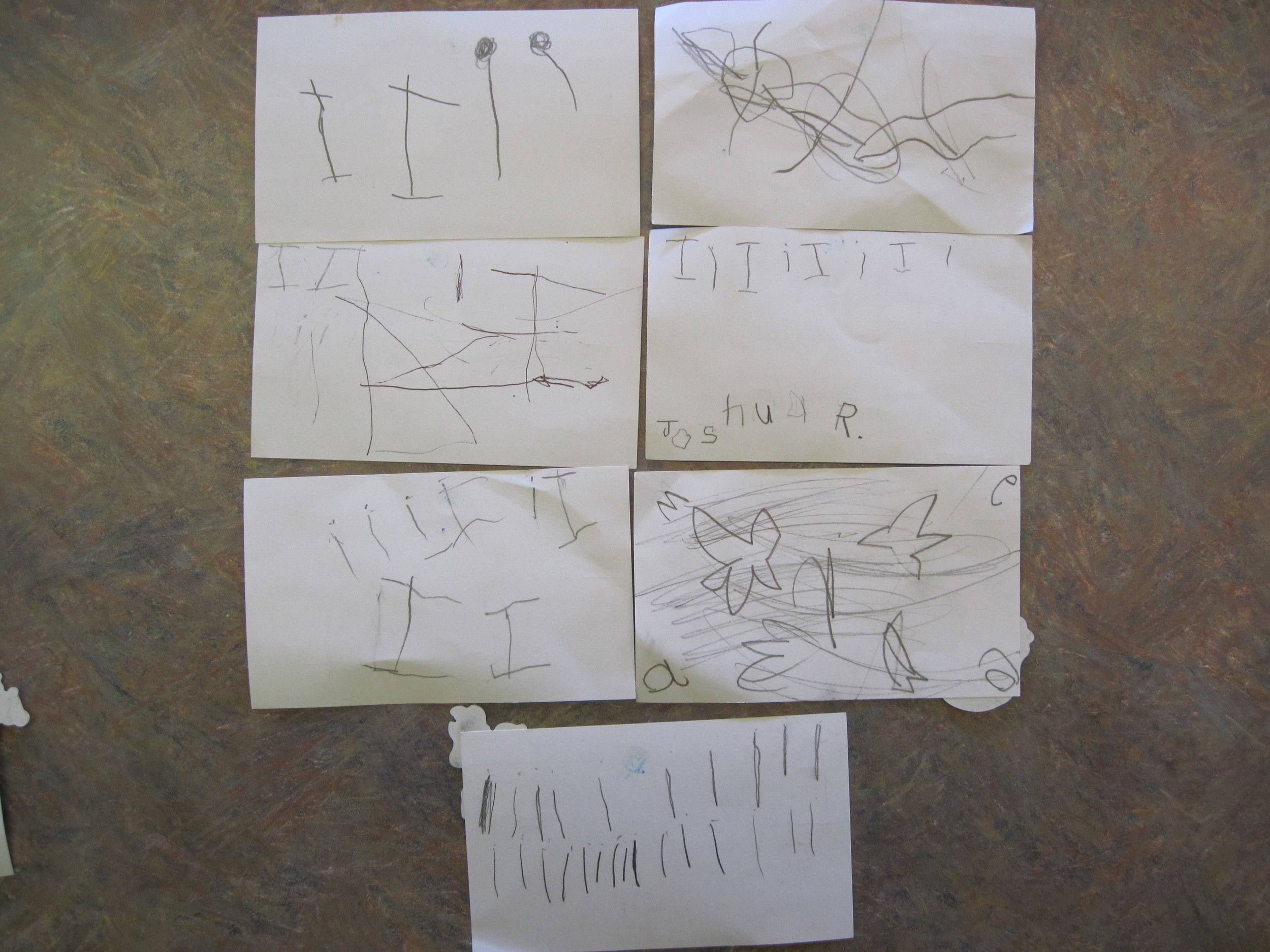
Using this Kanban with our students we learned that theexcitement from the children grew every week with each letter they completed on their task card. Students were excited to share their work with other children in the classroom.  Students wanted to collaborate on the chalkboard writing their letters, teaching other studentshow to write letters. The students were waiting at the board before their name is called to come over with their task card, in anticipation of receiving a sticker reward for a job well done.  We had a completely engaged classroom environment.We had many, many retrospective talks about the board, we had more Kaizen moments than I can list. It was like standing back watching a puzzle magically come together piece by piece every week.Week after week students began going above and beyond, even turning their task cards over to more work!

Preschool alphabet learning task cards

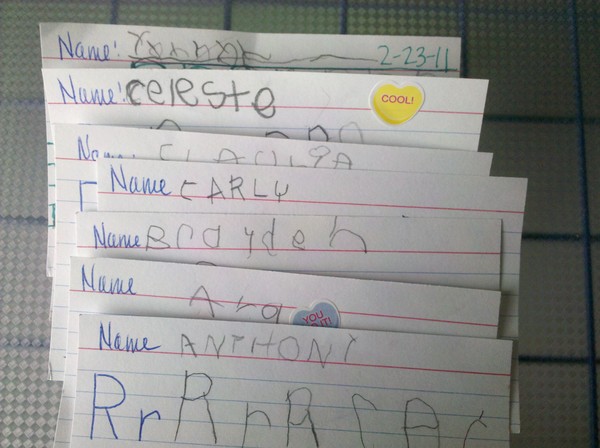
We realized we didn't have to write the students names on the cards anymore because they began to write their names on their own on the cards.

Examples of student written names ABC's Kanban

We were amazed by our ABC's Kanban and how much the students embraced their learning experience. When we were wrapping up our parent-teacher conferences, when speaking with the parents I heard the following statements, “My child loved working on her task card it made her feel important.”“To have all the cards for my child to be able to look back and see all the letters he learned, I wasn’t just telling him, I was showing him, he was able to see all he’s learned.” And finally one parent remarked to me “He was so excited to get into class to show you his card, week after week his excitement grew, he’s been so proud of his work.” The 4 & 5 year old preschool class continues to use this ABC's Kanban successfully.

This an updated post that originally appeared on the Nothing is Out of Reach blog.

Kanban: A Universe of Options for Life's Planning & Organizing Challenges #5

This is the 5th post in a guest series, Kanban: A Universe of Options for Life's Planning & Organizing Challenges by Nadja Schnetzler.

There are all kinds of kanban boards I have created and used in different situations. Here are a few images and short explanations:

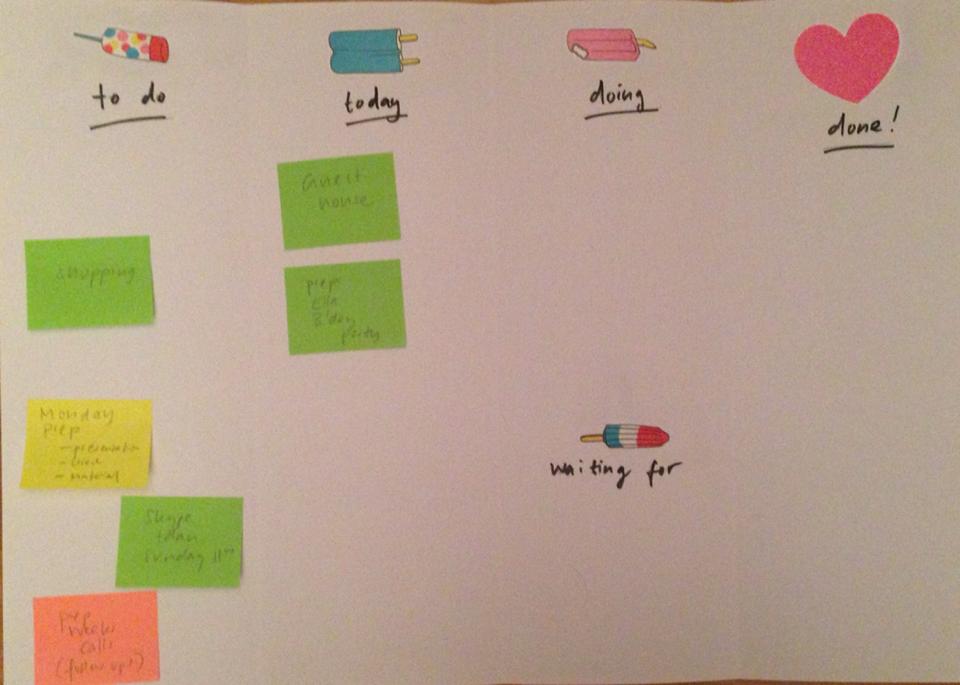
Summer themed Personal Kanban

A kanban for summer

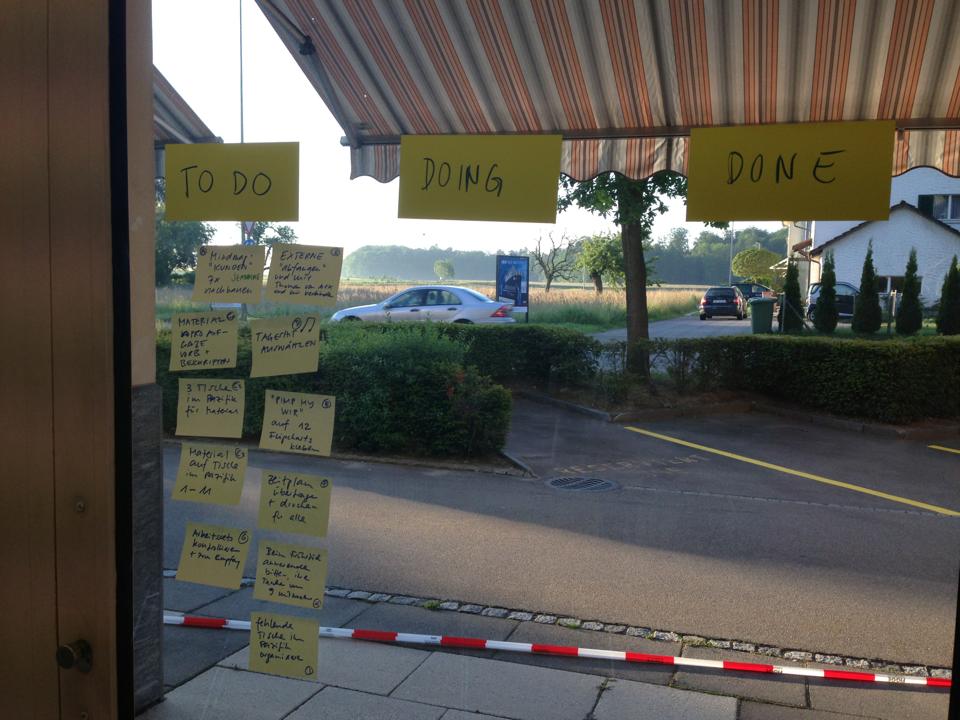
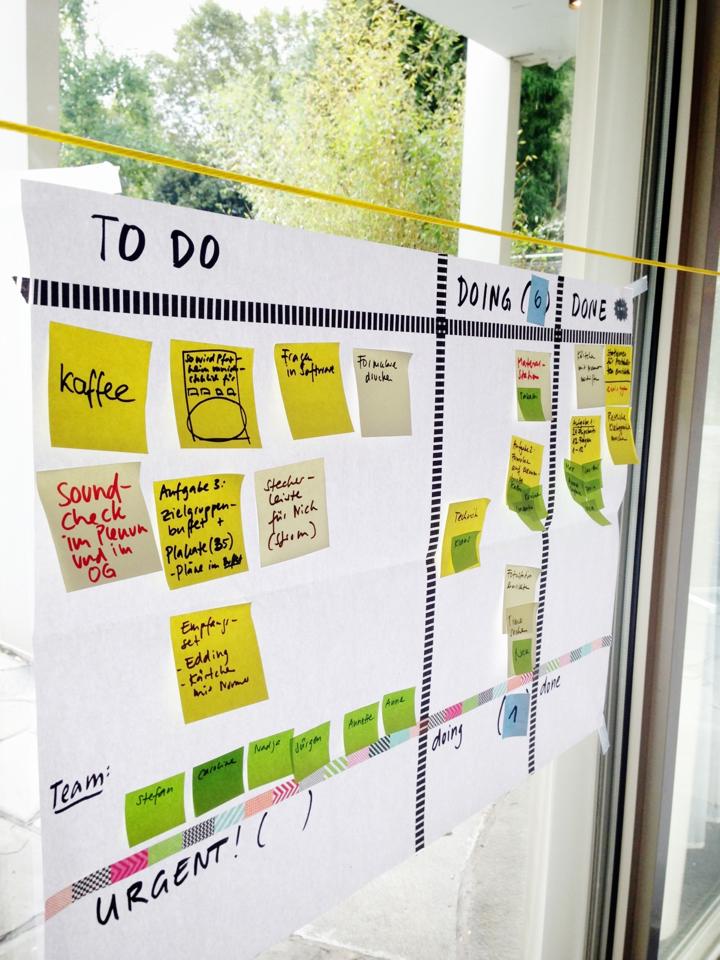
Makeshift window kanban

A makeshift kanban board on a window for a team who had to prepare an event in short time and had no method to do it in a good way.

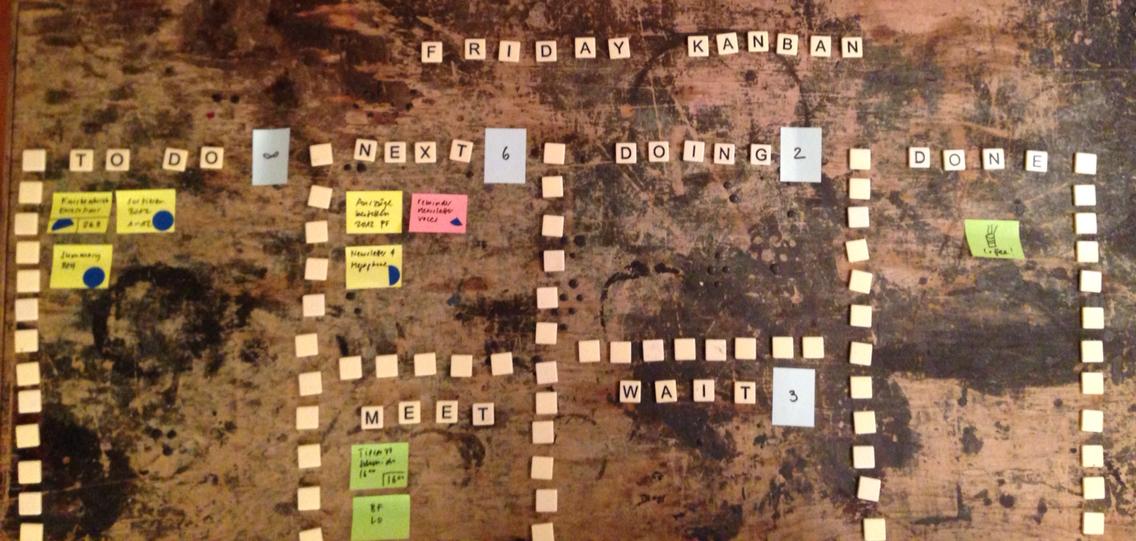
coffee table kanban made with scrabble tiles

A kanban board made of scrabble tiles on the table of my living room.

Organizing quickly with a new team Kanban

A kanban board for a project team with people who have never worked together before and had to get organized in a few hours.

Digital vs. Analog

I am an incredibly digital person. I spend most of my day in front of a computer, tablet or smartphone, and I love to spend free time online, too, researching ideas, reading or just stumbling through the web. So, most people are somewhat perplex that I do not use an online kanban board. I have tried out several of the online kanban software available, and some of them are really good, but nothing, really nothing beats an analog kanban board made from paper and pencil or drawn on a blackboard or whiteboard. I think the reason is that the feeling of transporting the tasks through the board is never quite the same on an online board as on the "real" version.

Remote teams

I have done a fair amount of work with remote teams in the past and this is the only use case where an online board beats the offline version. It's great to see how team members are collaborating over distance by using a digital kanban board, and it’s great to see postits move. Every meeting starts around the kanban board over skype, and the discussions are very similar to teams that stand in front of a «real» kanban.

All in all, my journey with kanban has been immensely beneficial so far, and I am looking forward to all the new things I will learn with kanban over the next years, in all contexts and aspects of life.

Nadja Schnetzler was born in Switzerland and spent her childhood in Mexico City. After graduating from High School, she was a founding member of BrainStore, the first Idea Factory in the world. She has a bachelors degree in journalism from renowned “Ringier School of Journalism”. Over the last 25 years, Nadja has led over 600 innovation projects for companies like Nestlé, Siemens, the Swiss Railways, Kraft Foods, BMW, Save the Children, the United Nations or Amnesty International. She is the author of the book “The Ideamachine” (Wiley) and a sought-after speaker and lecturer at various universities.In 2012, Nadja founded «Word and Deed» with the aim at inspiring organisations, companies, teams and individuals. Word and Deed works in the areas of communication, innovation and collaboration. Kanban has become one of the most important agents of change for Nadja and her clients.Nadja lives in Switzerland with her husband and her two teenage kids. She enjoys listening to and playing baroque music (with her violin) and has an open house for people from all walks of life.This is the final post in the guest series by Nadja Schnetzler - Kanban: A Universe of Options for Life's Planning & Organizing Challenges.  You can read the previous post here.

" "